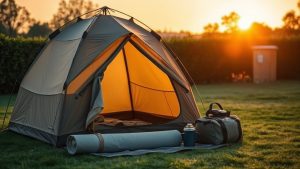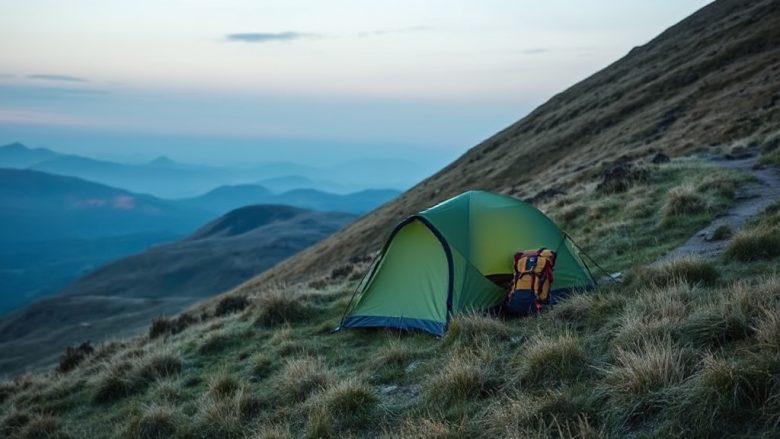
If your wild camps feel slightly wrong every time, the cause is usually one of five things, and none of them are about buying better gear. You already own enough kit. What you lack is a set of habits that turn a night on a hillside from an endurance test into something you’d repeat on purpose. Learning how to improve your wild camping is mostly about diagnosing the same handful of recurring failures: bad sleep, a bad pitch, a pack that fights you, the low-grade stress of being seen, and a morning exit that takes far too long.
This isn’t a beginner’s introduction. It assumes you’ve done this a few times, you know roughly what you’re doing, and you’ve noticed that the experience doesn’t quite match the version in your head. That gap is fixable, and it’s fixable without spending much money.
Why Your Sleep Is Bad and What Actually Fixes It
Poor sleep is the most common complaint among people who wild camp regularly, and it’s rarely the mat’s fault. Before you blame your equipment, run a quick diagnostic. Ask yourself three questions. Did I eat properly in the last two hours before lying down? Was my pitch level, or was I subtly sliding all night? And was I too warm, not too cold?
Cold is the problem everyone prepares for. Overheating is the problem most people actually have. You climb into a sleeping bag while still warm from walking, the bag traps that heat, you wake at two in the morning soaked in sweat, you unzip, you cool down too fast, and the rest of the night is a miserable cycle of zipping and unzipping. The fix is unglamorous: vent before you’re hot, not after. Open the bag, sleep in fewer layers than you think you need, and keep a dry hat within reach for the small hours when your core temperature genuinely drops.
Food matters more than most people admit. A big meal right before bed pulls blood toward your gut and away from the thermoregulation you need. A modest, warm, carbohydrate-heavy snack an hour before sleep works better. So does a hot drink, provided you deal with the bladder consequence before you get into the bag rather than at 4 a.m.
Finally, address the slope honestly. A pitch that looks flat in the dusk is often tilted by a few degrees, and a few degrees is enough to send you into the downhill wall of your tent by midnight. Lie down on the ground before you pitch anything. Not kneel. Lie. You’ll feel the slope immediately, and you can shift the whole footprint a metre or two to a genuinely level patch.
Choosing a Pitch You Won’t Regret by Morning
Bad pitch choice is the failure that ruins the other four. Pick wrong and you’ll sleep badly, wake up damp, and be visible from a path you didn’t notice in the dark. The diagnostic here is simple: if you chose your spot in the last fifteen minutes of daylight, you probably chose it badly.
Start by arriving earlier than feels necessary. An hour of daylight is worth more than any piece of gear you could carry. Use that hour to walk the area rather than settle on the first flat-looking patch. Look for ground that drains. Avoid hollows, the bottoms of gullies, and anywhere that has the faint dark sheen of a place that holds water. Compacted ground under a tree canopy can look dry and turn out to be the wettest spot on the hill after a night of condensation.
Think about wind direction as well as wind strength. A pitch that’s sheltered from the prevailing wind is comfortable; a pitch in a dead calm hollow is a condensation trap. You want moving air, not still air. Slightly elevated, slightly exposed, with a natural break upwind, is the sweet spot.
Then consider the morning. Where does the sun hit first? A pitch that catches early light dries your tent while you eat breakfast. A pitch in permanent shade means you pack a wet shelter and carry that weight all day. It’s a small thing that compounds over a multi-day trip.
Lightening the Pack Without Losing What You Need
Most people’s packs are heavy for boring reasons, not because they’re carrying a lot of gear. The weight hides in duplication, in packaging, and in things carried for a version of the trip that never happens.
Do a proper audit before your next trip. Empty the pack completely and put everything into three piles: used every trip, used sometimes, used once and forgotten. The third pile is where the savings live. That spare stove you’ve never needed. The second water bottle. The book you never open because you fall asleep immediately. The extra layer that’s identical in warmth to the one you’re wearing.
Then look at what remains and ask whether any of it can do two jobs. A sit pad that doubles as insulation under your torso at night. A stuff sack that becomes a pillow. A trowel that’s also your stake for a tarp corner. This isn’t ultralight dogma; it’s just refusing to carry the same function twice.
Water is the last big lever, and it’s the one people get wrong in both directions. Carrying four litres up a hill because you’re not sure about sources is exhausting. Carrying one litre and hoping is reckless. Learn to read a map for likely water and carry a filter you trust, then top up at the last reliable source before the climb rather than hauling the weight from the valley floor.
Managing the Nervousness of Being Seen
The anxiety about being spotted is real, and pretending it isn’t will just keep you awake. The trick is to convert vague dread into a specific plan. Most of that nervousness comes from uncertainty, not from genuine risk.
Do your homework on where you’re going. Know whether the land is open access, whether there’s a bothy or a designated area nearby, and what the local conventions are. Certainty removes a surprising amount of the tension. If you know the score, you stop imagining worst-case scenarios at midnight.
Then choose a pitch that’s discreet without being hidden. The instinct is to tuck yourself into a dense thicket, which is exactly where you’d be hardest to find if something went wrong and most likely to be stumbled upon by someone cutting through. A small, low-profile shelter in a natural fold of ground, away from paths and away from the obvious flat spots others use, is both safer and less conspicuous.
Arrive late, leave early, keep noise down, and use a muted colour rather than something that glows in the dark. If someone does pass, a quiet greeting and a normal conversation defuses almost everything. Most people you meet in the hills are not looking for a confrontation. Confidence, not stealth, is what actually keeps you comfortable.
Mastering the Morning Exit
A slow morning exit is the quiet thief of a good wild camp. It eats your daylight, it leaves you packing in a rush, and it means you leave traces you didn’t intend to. The diagnostic is straightforward: if your pack-up takes more than about twenty minutes, your system is inefficient, not your motivation.
The fix starts the night before. Pack everything you won’t need overnight before you sleep. Lay out the things you’ll need in the order you’ll need them. Know where your stakes are. Know which pocket your breakfast is in. A tent that’s packed in a known, repeatable way comes down faster and goes back up faster the next night.
Have a fixed sequence and never vary it. Mine is: out of the bag, dress, boil water, eat, break the shelter, pack, walk. Because it never changes, I don’t waste mental energy deciding what to do next at six in the morning when I’m cold and stupid. That consistency is worth more than any lightweight gadget.
And leave no trace properly, not symbolically. Check the ground where you pitched for anything dropped, buried, or left behind. Scatter your cooking area back to how you found it. Take everything out, including the things that feel biodegradable. A clean exit is also a fast exit, because you’re not hunting for lost items in the grass.
Running a Self-Audit After Every Trip
The single biggest improvement you can make is to review each trip honestly rather than just remembering whether you enjoyed it. A short self-audit, done in your head on the drive home, will surface patterns faster than any amount of new gear.
Think of it as a small table of questions you run through every time. First, sleep: how many hours did I actually get, and what woke me? Second, pitch: would I choose that exact spot again, and if not, why not? Third, pack: what did I carry that I never touched, and what did I wish I’d had? Fourth, exposure: did I feel seen, and was that feeling justified or imagined? Fifth, exit: how long did it take, and what slowed it down?
Write the answers down, even briefly. Over four or five trips you’ll notice that the same two or three problems keep appearing, and those are the ones worth solving properly. Most people never do this, which is why they keep having the same slightly-wrong night for years. The skill of wild camping isn’t in the kit you buy. It’s in noticing what goes wrong, fixing one thing at a time, and going back out to test whether the fix held.
Frequently Asked Questions About Improving Wild Camping
How do I stop waking up cold in the middle of the night?
Usually by managing heat rather than adding layers. Vent your sleeping bag before you overheat, sleep in fewer clothes than you’d expect, eat a modest warm snack before bed rather than a heavy meal, and keep a dry hat and socks within reach for the coldest hours.
What’s the best time to arrive at a wild camping spot?
With at least an hour of daylight left. That gives you time to walk the ground, find a genuinely level and well-draining pitch, check your wind exposure, and set up without rushing. Arriving in the last few minutes of light almost always leads to a worse pitch.
How can I reduce my pack weight without buying new gear?
Empty your pack and sort everything into used every trip, used sometimes, and used once. Cut the third pile, stop duplicating functions, and carry water based on the last reliable source before your climb rather than from the start of the day.
Is it normal to feel anxious about being seen while wild camping?
Yes, and it usually comes from uncertainty rather than real danger. Knowing the access rules for your area, choosing a discreet but not hidden pitch, arriving late and leaving early, and being willing to greet anyone you meet calmly will remove most of that anxiety.